
Large expenses often feel intimidating because the full number shows up in your mind before the monthly plan does. Whether you are preparing for a car repair, replacing an appliance, paying for holiday costs, covering a home project, or saving for travel, the total amount can seem impossible when you look at it all at once. That feeling alone is enough to make some people delay planning until the expense is much closer.
The easiest way to make a big expense feel manageable is to stop thinking only about the final number and start thinking in monthly steps. When you break a large goal into smaller pieces, the saving process becomes something you can actually work into your budget. Instead of “I need a lot of money,” the question becomes, “How much can I reasonably set aside each month to get there?”
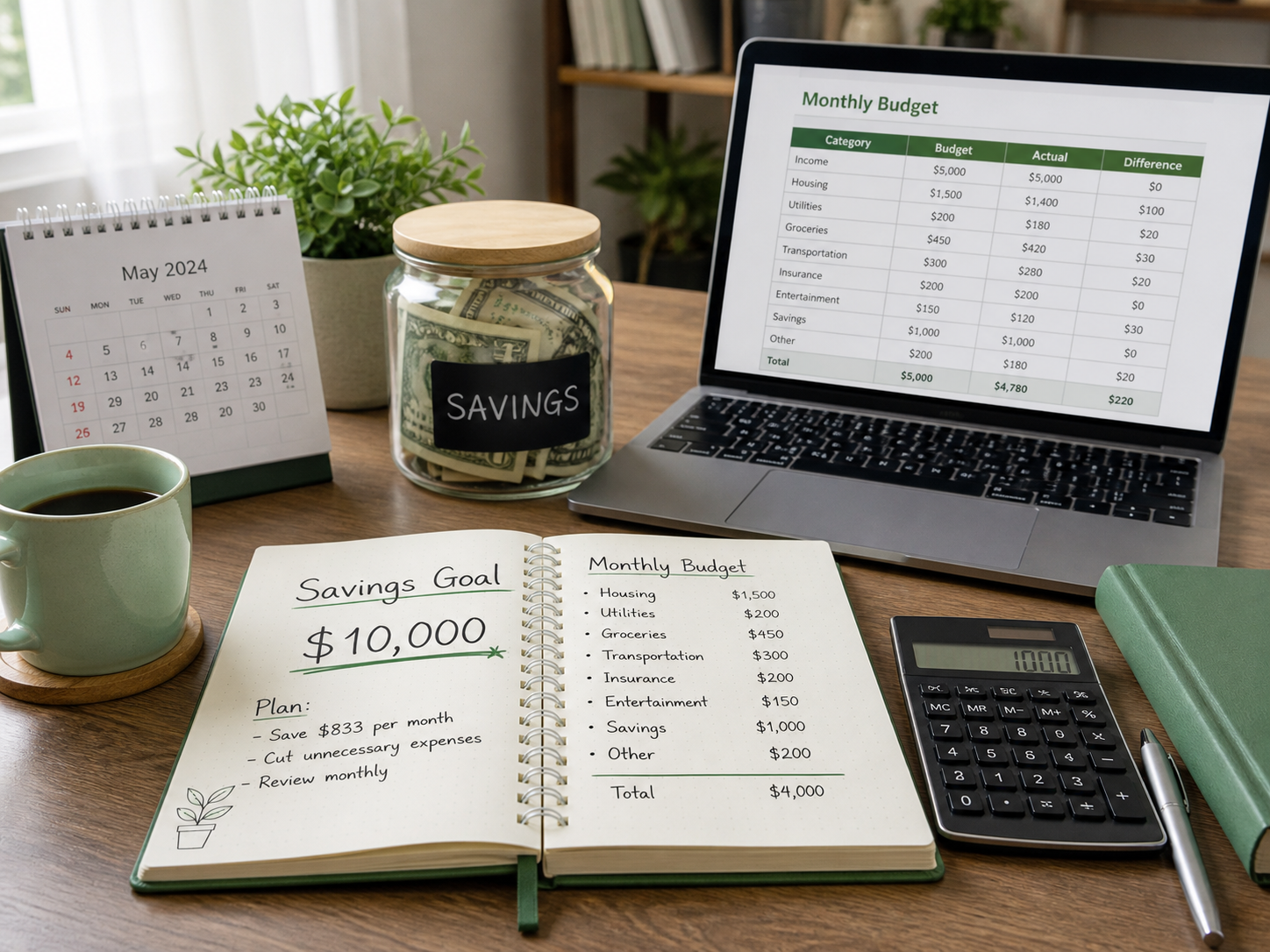
The process starts with two numbers: the target amount and the timeline. If you know how much you want to save and when you want the money ready, you can estimate the monthly amount needed. That monthly figure is what turns a vague plan into a practical one. It gives the goal structure.
For example, a large expense may feel overwhelming when you view it as one total. But when that same amount is divided over several months, it often becomes much easier to picture. Even if the monthly number still feels tight, it tells you something useful. It shows whether the current timeline is realistic and whether the goal needs to be adjusted.
If the monthly amount feels too high, that does not mean the goal is impossible. It may simply mean the goal needs a longer timeline, a lower target, or a staged approach. Maybe the purchase can wait another few months. Maybe the target cost can be reduced by choosing a simpler option. Maybe you can save part of the amount now and cover the rest later. The point is that a clear estimate gives you options.
Saving month by month also makes progress easier to track. Instead of feeling like nothing is happening because you are still far from the final amount, you can see each monthly contribution as proof that the goal is moving. That progress matters. It keeps the plan from feeling abstract and can make it easier to stay consistent, especially for long-term goals.
Another major benefit of planning this way is that it reduces the need for last-minute borrowing. A large expense is much more stressful when it arrives before you have prepared for it. By setting aside smaller amounts over time, you reduce the chance that the entire cost will land at once with no warning. Even partial preparation can reduce stress significantly.
Large expense planning also fits well with the idea of sinking funds. If you know something is coming eventually, even if the exact month is uncertain, setting aside money gradually is usually easier than waiting until the need becomes urgent. This makes your overall budget more honest because it includes future costs rather than acting as if they do not exist until the last minute.
When setting a savings plan, it helps to decide where the money will come from. Some people prefer a fixed monthly amount. Others save more aggressively during stronger months and scale back during tighter ones. There is no single correct way to do it. What matters most is that the plan matches your actual cash flow well enough to continue.
It can also help to keep the goal visible. A note in your budget, a separate savings category, or a simple tracker can remind you that the money has a purpose. Saving often feels easier when the reason is clear. A vague savings goal can drift. A specific planned expense feels more concrete and easier to commit to.
You do not need a complicated system to save for something big. You need a target, a timeline, and a monthly amount that makes sense for your life. Once those pieces are in place, the expense usually feels less intimidating because it has been broken into manageable parts.
Big expenses become easier to face when you stop treating them like sudden mountains and start treating them like planned steps. A month-by-month savings approach turns the goal into something practical, trackable, and more achievable.