
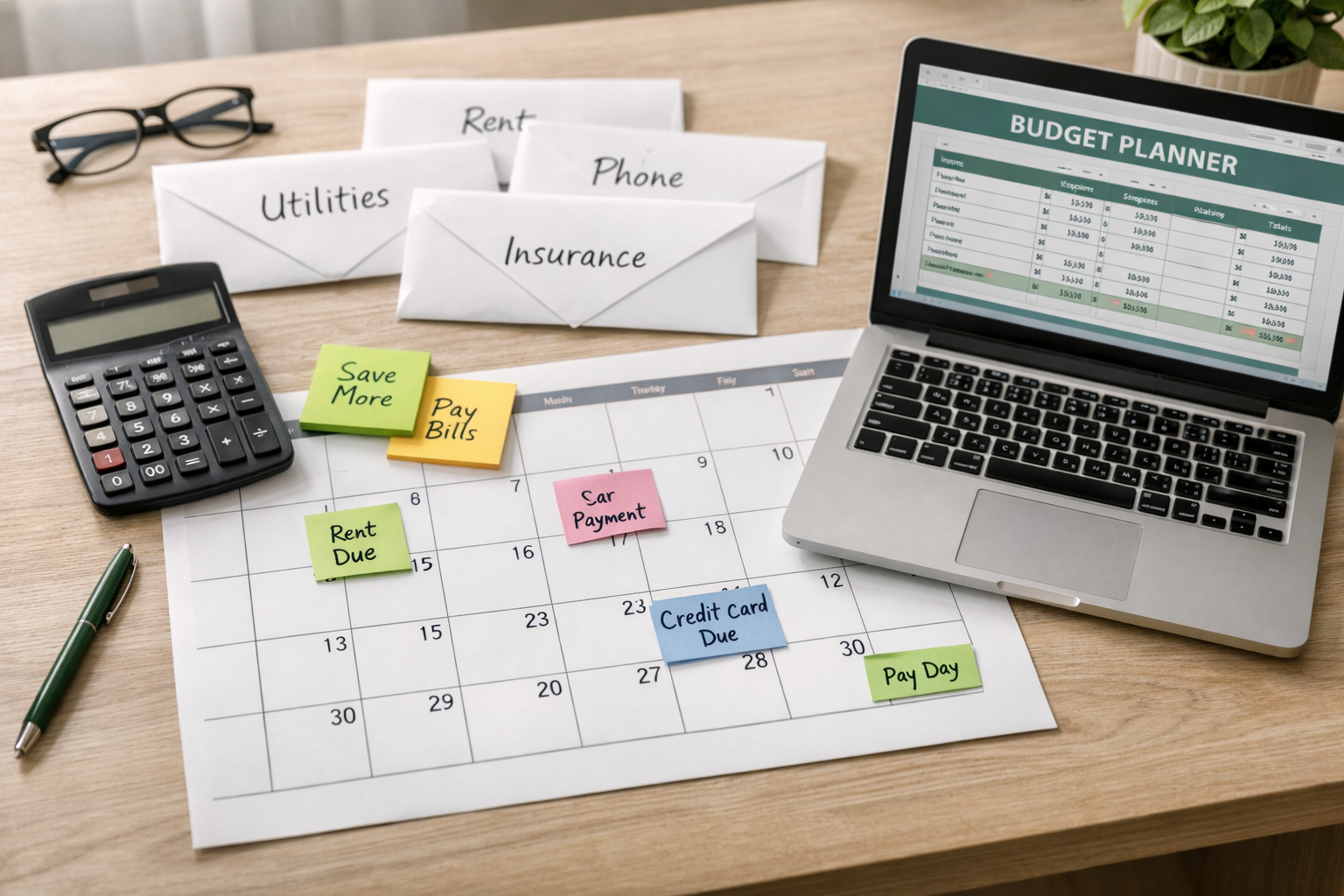
One of the most frustrating parts of budgeting is not always the total amount of your bills. Often, it is the timing. When bills are scattered throughout the month, money can feel like it is disappearing in random directions. Even if your overall income is enough, the uneven spacing of due dates can make you feel like you are constantly catching up.
This is why so many people struggle with a monthly budget that looks fine on paper but still creates stress in real life. The issue is not always overspending. Sometimes the budget is simply not organized in a way that matches when income arrives and when bills leave the account. The solution is to stop looking at the budget as one large monthly event and start organizing it around timing.
The easiest place to begin is with a full bill list. Write down every recurring bill you pay: rent or mortgage, electricity, water, phone, internet, streaming subscriptions, insurance, loan payments, credit cards, and any other regular expenses. Then write the due date next to each one. If you have bills on automatic payment, include those too. Automatic does not mean invisible. They still affect your cash flow, and they need to be part of the plan.
After you list the due dates, compare them to your income schedule. If you get paid weekly, biweekly, or twice a month, your pay cycle becomes the structure that holds the plan together. Ask a simple question for each bill: which paycheck should cover this bill before it is due? Once you answer that question for every recurring expense, the month starts to feel more organized.
For example, suppose you are paid on the first and fifteenth. Rent may need to come out of the first paycheck. Utilities due on the eighth may also need to come from that same paycheck. A phone bill due on the twentieth might be better attached to the second paycheck, along with groceries and gas for the rest of the month. This approach turns timing into a visible system instead of an ongoing surprise.
Another helpful step is to group expenses by pay period rather than by category alone. Many people know they spend money on housing, utilities, food, and transportation, but that does not automatically tell them which paycheck should cover each item. When you group by pay period, you make the next decision easier. The money that arrives has a list of responsibilities attached to it.
If several bills hit at the same time and create pressure, review whether any due dates can be changed. Some companies allow customers to move payment dates, especially for credit cards, phone service, or insurance. You may not be able to shift every bill, but moving even one or two due dates can make the budget feel more balanced. It is not always possible, but it is worth checking.
A small checking account buffer can also make a huge difference. Even a modest cushion can reduce the stress of uneven due dates. Without a buffer, one badly timed bill can throw off your entire pay period. With a little extra room, you have more flexibility to handle timing issues without feeling like one payment is going to trigger a chain reaction.
Variable expenses should be planned with timing in mind as well. Groceries, gas, and household items do not always have formal due dates, but they still need to be assigned to specific pay periods. If you wait to deal with them casually, they can quietly absorb the money that should be covering an upcoming bill. Planning these categories with each paycheck gives you better control over what remains available.
It is also useful to review your subscriptions and smaller recurring charges. These are easy to overlook because many are inexpensive on their own. However, when several of them land at the wrong time, they can create more strain than expected. A simple review of your recurring charges may reveal things you no longer need or costs that can be shifted.
When bills are due on different dates, the goal is not to create a complicated system. The goal is clarity. A list of bill amounts, due dates, and assigned paychecks can go a long way. You do not need a giant spreadsheet or a perfect financial setup to improve your timing. You just need to make the flow of money visible before the bills hit.
Budgeting around due dates also helps you think more realistically about what is available to spend. If your paycheck looks healthy but several bills are due before the next one arrives, the money is not as free as it may feel on payday. Seeing that ahead of time can reduce overspending and help you avoid the stress of scrambling later.
Many budgeting problems become more manageable once timing is organized. A budget does not always fail because the numbers are wrong. Sometimes it fails because the calendar was ignored. By matching your bills to your pay schedule, you give your budget a structure that actually fits the way your money moves.
Try the Tool
Use the Paycheck Budget Calculator to estimate which expenses your next paycheck can cover.