
One of the easiest ways to make budgeting feel harder than it needs to be is to start with too many categories. When people first decide to organize their money, they often create a long list of detailed spending groups because they think a “better” budget must also be a more complicated one. In reality, many beginners do better when they keep the structure simple.
A budget category is just a label that helps you direct money where it needs to go. That is all. It is not supposed to feel like accounting homework. If the category system becomes too detailed too quickly, the budget may feel overwhelming before it becomes useful. A simple structure is often easier to maintain, and consistency matters much more than complexity.
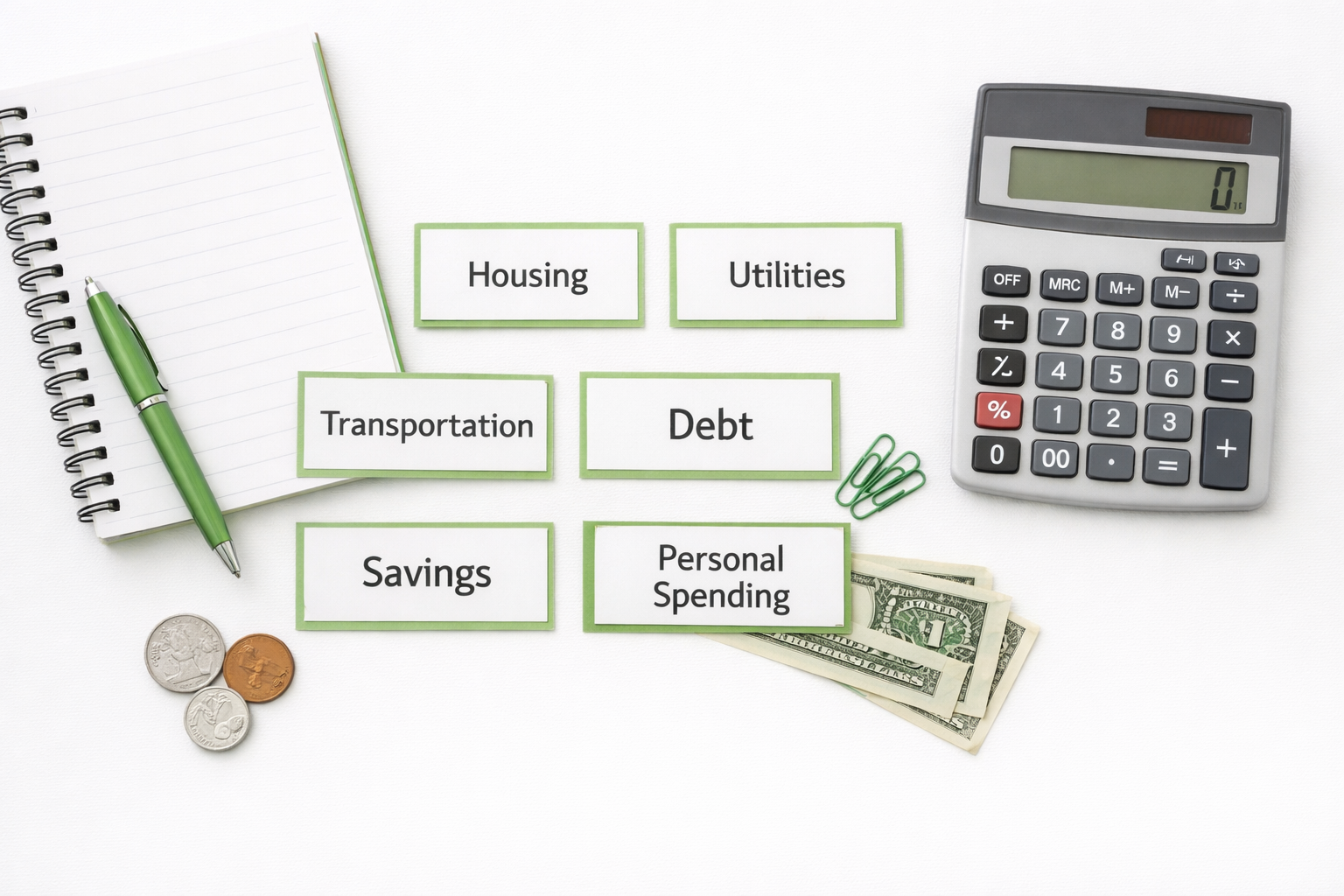
A good beginner budget often starts with just a few main groups: housing, utilities, food, transportation, debt, savings, and personal spending. These categories cover the most common parts of daily life without adding too much detail. Once you get comfortable using them, you can always split them into smaller categories later if that feels helpful.
Housing usually includes rent or mortgage. It may also include renter’s insurance, homeowner’s insurance, or property-related costs if you prefer to group them there. Utilities can include electricity, water, gas, internet, and phone service. Food usually begins with groceries, and some people also include basic household items in that same category.
Transportation may include gas, public transportation, car insurance, parking, tolls, and basic car maintenance. Debt includes credit cards, personal loans, student loans, or other regular repayment obligations. Savings covers emergency funds, sinking funds, and future goals. Personal spending is the flexible area that may include entertainment, clothing, convenience purchases, small extras, and non-essential spending.
The reason this simple setup works so well is that it gives you quick visibility without drowning you in details. You can usually tell at a glance whether one category is pulling too much money from the rest of the budget. If food keeps running high, that is useful to know. If transportation is larger than expected, that tells you something too. A simple budget helps you spot the big patterns first.
Some people wonder whether simple categories are “too basic” to be useful. They are not. A simple category system is often the best place to start because it reflects the actual purpose of a budget: helping you make decisions. If the budget becomes so complicated that you avoid looking at it, it is not helping. A basic budget you actually use is far more effective than a perfect budget you ignore.
As you get more comfortable, you may decide to create more detail in certain areas. For example, you may want to split food into groceries and dining out. You may want to separate subscriptions from utilities. You may want a category specifically for children’s expenses, medical costs, or pets. Those changes are fine when they make the budget more helpful, but they do not need to happen on day one.
It is also important to keep your categories realistic. If you know you spend on convenience purchases or fun money, include a category for that instead of pretending it will not happen. Budgets tend to work better when they reflect real behavior. The goal is not to impress yourself with a perfect plan. The goal is to create a workable system that matches your life closely enough to guide your choices.
If your income comes in more than once a month, these categories can also help you break each paycheck into clear assignments. One paycheck may cover housing, utilities, and groceries. Another may cover debt, savings, transportation, and personal spending. Once the categories exist, it becomes easier to divide your income in a practical way.
Simple categories also make review easier. At the end of a week or pay period, you can ask a few straightforward questions. Did housing and bills get covered? Did groceries stay close to the estimate? Did personal spending creep too high? Is savings actually happening? You do not need a giant report to answer those questions. A few broad categories are often enough.
If you are just starting out, give yourself permission to begin with less. You do not need twelve tabs, dozens of labels, or a complicated tracking system to make progress. Start with the basic groups that matter most, use them consistently, and adjust as needed. The best budget categories are the ones that help you understand your money without creating more stress.