
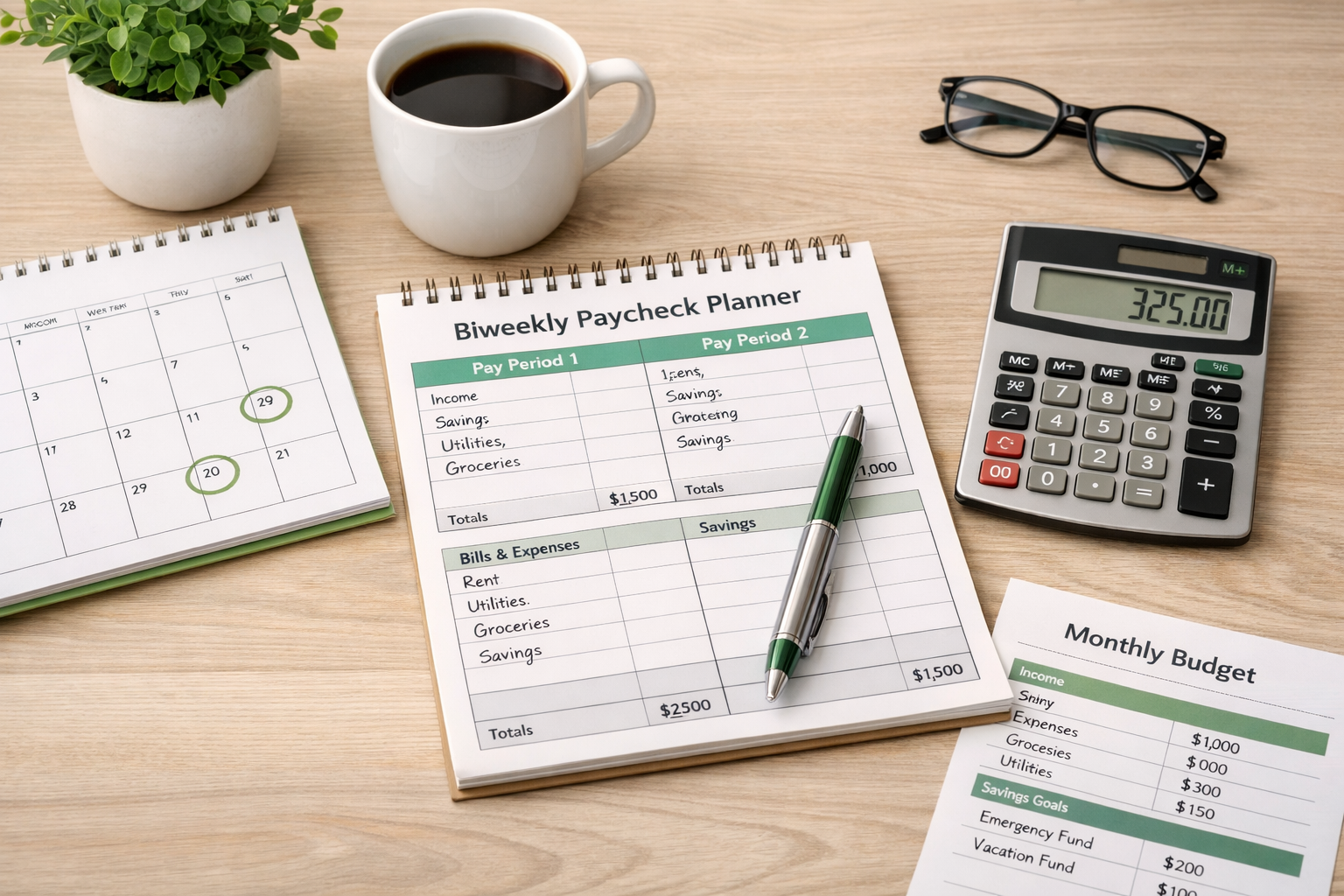
Getting paid every two weeks can feel awkward at first, even if your income is steady. Most bills arrive on a monthly cycle, but your pay schedule does not line up neatly with the first and last day of the month. That mismatch is what creates confusion for many people. They may earn enough to cover their expenses, yet still feel behind because they are not sure which paycheck should cover which bills.
A biweekly budget works best when you stop treating the month like one giant pile of money and start treating each paycheck like its own planning period. Instead of asking, “Can I get through the whole month?” it helps to ask, “What does this paycheck need to do before the next one arrives?” That small shift makes budgeting feel more manageable and often more accurate.
The first step is to list your fixed expenses. These are the bills that usually stay the same or stay close to the same each month, such as rent or mortgage, electricity, internet, insurance, car payments, subscriptions, and minimum debt payments. Once you have that list, write down the due date for each bill. Seeing the due dates next to the amounts makes it much easier to connect those bills to your actual pay schedule.
After that, look at your paydays for the month. If you are paid every two weeks, some months will have two paychecks and some months will include a third paycheck. Match each bill to the paycheck that comes before the due date. For example, if rent is due on the first and your electric bill is due on the seventh, both may need to come from the same paycheck. If your phone bill is due on the twentieth, it may fit better under the second paycheck.
This approach helps you assign work to each paycheck instead of reacting to bills one by one as they hit your account. It also reduces the temptation to spend freely right after payday without considering what is still due before the next check. A paycheck-based budget gives the money direction before it starts disappearing.
Once the fixed bills are assigned, move to variable essentials. These usually include groceries, gas, household basics, and other weekly or recurring necessities. Try to estimate these categories honestly. It is better to create a budget that reflects your real habits than one that looks good on paper but falls apart in real life. If groceries have been costing more lately, use the more realistic number. If gas varies, use an average based on the last month or two.
Savings should also have a place in the plan. A lot of people say they will save whatever is left over, but in practice, there often is not much left by the end of the pay period. Even a small savings amount works better when it is planned ahead of time. A paycheck budget is not just about covering bills. It is also about helping you direct money toward future goals before spending fills the gap.
It can help to include one category for flexible spending as well. This is the money available for things like dining out, convenience purchases, small entertainment expenses, or unplanned extras. A budget that leaves no room for normal life often feels too restrictive to follow for very long. Giving yourself a reasonable amount of flexible spending can make the budget more sustainable.
One of the biggest advantages of biweekly budgeting is visibility. When each paycheck has a clear job, you do not have to wonder whether there is enough money for the next bill. You can look at the plan and know what has already been assigned. That reduces stress, especially if you have ever felt like money vanishes between paydays without a clear reason.
Another benefit is that biweekly budgeting helps you deal with irregular timing more calmly. Some months feel tighter not because you are overspending, but because several large bills happen to cluster between the same two paychecks. Seeing that pattern in advance allows you to prepare instead of being caught off guard. You may decide to trim spending for one pay period, shift savings slightly, or build a small buffer over time to smooth out those uneven weeks.
The extra paycheck months are especially important. If you are paid biweekly, you will occasionally receive three paychecks in one month. Many people think of that third paycheck as bonus money, but it can be much more useful when planned intentionally. It may be a strong opportunity to add to savings, catch up on debt, prepare for annual expenses, or create a cushion for future tight weeks. Treating it intentionally can improve your overall budget more than spending it impulsively.
If you are new to paycheck budgeting, keep the process simple. You do not need a perfect spreadsheet or a complicated system. Start with your paydays, list the bills due before the next check, estimate essentials, assign a savings amount, and decide how much flexible spending is reasonable. Over time, you can adjust the numbers as you learn what works best.
The goal is not perfection. The goal is to make your income easier to manage in real life. A biweekly paycheck can absolutely work in your favor when you plan around timing instead of fighting it. Once each paycheck has a job, the month often feels much less chaotic.
Try the Tool
Try the Paycheck Budget Calculator to estimate how your next paycheck can be divided between bills, savings, and spending.