
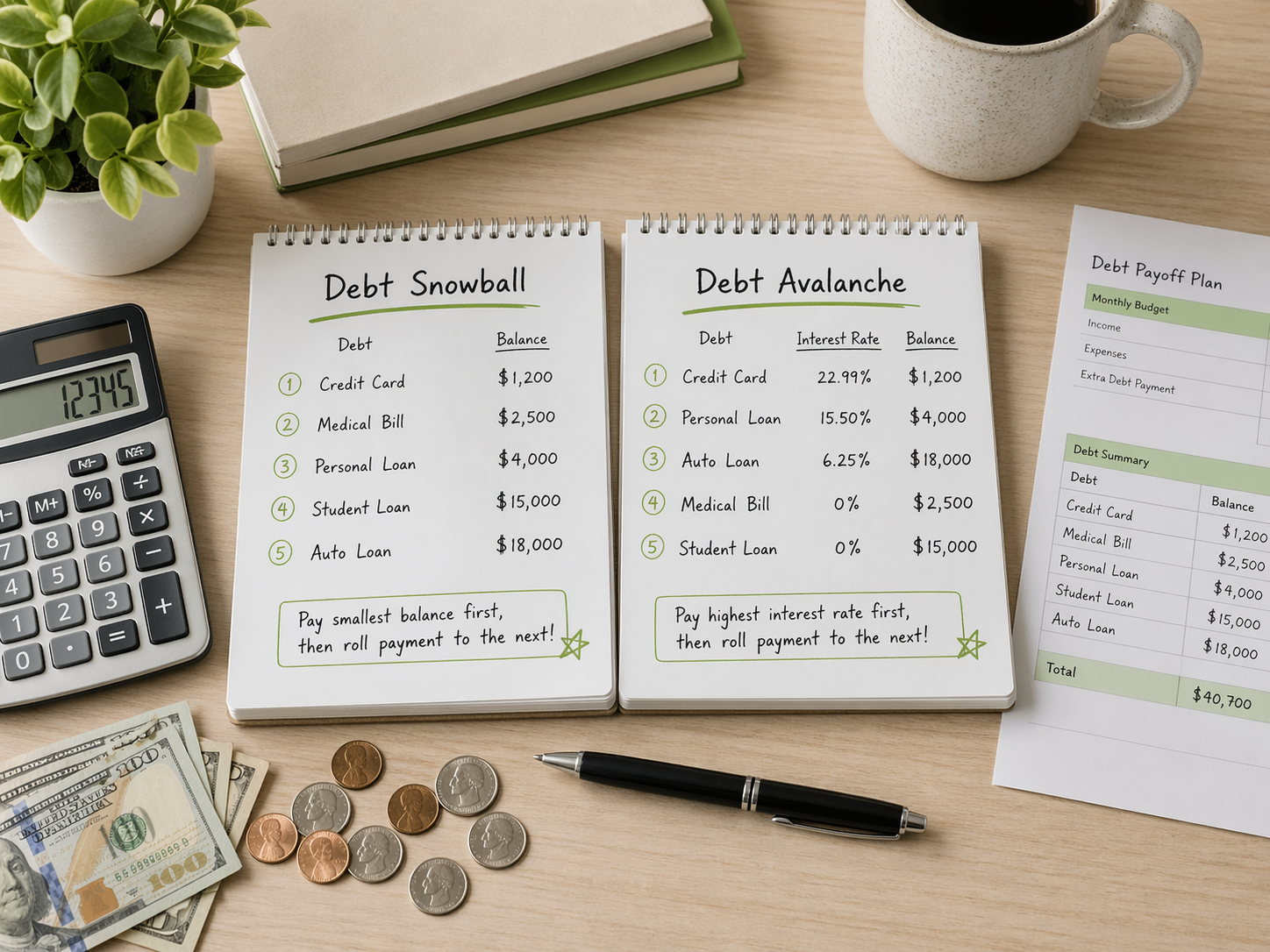
If you are trying to pay off debt, you have probably come across two popular approaches: the debt snowball and the debt avalanche. Both methods are designed to help you make progress, and both can work well. The main difference is how they decide which debt gets extra attention first.
The debt snowball focuses on the smallest balance first. You continue making minimum payments on all your debts, but any extra money goes toward the smallest one until it is paid off. Once that debt is gone, you roll its payment into the next smallest balance. As more debts disappear, the amount available for the next target grows, which is why the method is called a snowball.
The debt avalanche works differently. With this method, you also make minimum payments on all debts, but extra money goes toward the debt with the highest interest rate first. Once that debt is paid off, you move to the next highest rate. The idea is to reduce the most expensive debt first so you may pay less interest over time.
At first glance, the avalanche method often sounds more efficient, and mathematically it often is. If your goal is to reduce the total amount of interest paid, focusing on the highest interest debt usually makes sense. However, real life is not lived on a spreadsheet alone. Motivation matters too, and that is where the snowball method tends to appeal to many people.
Paying off the smallest balance first can create quicker emotional wins. Eliminating even one debt can feel encouraging, especially if you have been carrying several balances for a long time. That psychological boost can make it easier to stay committed. Some people do better with a strategy that builds momentum quickly, even if it is not the most mathematically efficient route.
So which method is better? The most honest answer is that the best method is usually the one you can follow consistently. A plan that looks ideal on paper but feels discouraging in practice may not serve you as well as a simpler approach that keeps you engaged. Debt payoff takes time, and staying consistent matters more than chasing a perfect strategy you will not maintain.
It can help to think about your personal tendencies. Do you feel more motivated by visible progress and quick wins? If so, the snowball method may suit you better. Do you prefer efficiency and know you will stay disciplined even if the first visible payoff takes longer? Then the avalanche method may be a better fit. Neither choice is foolish. They simply reflect different priorities.
Before choosing either one, it helps to understand your current numbers. That means knowing your balances, monthly payments, and, ideally, the approximate timeline you are facing under your current setup. Without that clarity, it is hard to know whether you are making progress quickly, slowly, or barely at all. A simple estimate can make a big difference because uncertainty often makes debt feel heavier than it actually is.
Another useful point is that you do not need to follow either method in a rigid or extreme way. Some people use a hybrid approach. They may start with one small balance to create momentum and then switch to higher-interest debt. Others may focus on the highest interest debt but still choose to eliminate a very small balance if it simplifies the budget quickly. Personal finance is personal, and the strategy should serve your life rather than the other way around.
It is also important to remember that the payoff method is only one part of the process. The amount you can consistently pay each month matters too. Even a good strategy will move slowly if the monthly payment plan is unrealistic or inconsistent. This is why many people benefit from looking at their budget and debt plan together. Knowing what your paycheck can support helps you choose a payoff path that feels stable instead of exhausting.
If you have multiple debts, the emotional side of repayment should not be underestimated. Debt can create stress, shame, and avoidance. A method that helps you stay engaged and keep moving can have real value. On the other hand, if you are motivated by seeing the most efficient use of your money, the avalanche method can feel satisfying for that very reason.
The important thing is to pick a method, understand why you chose it, and keep going. Progress usually matters more than perfection. Whether you choose snowball, avalanche, or a blended approach, the goal is the same: to reduce debt steadily and create more breathing room in your finances over time.