
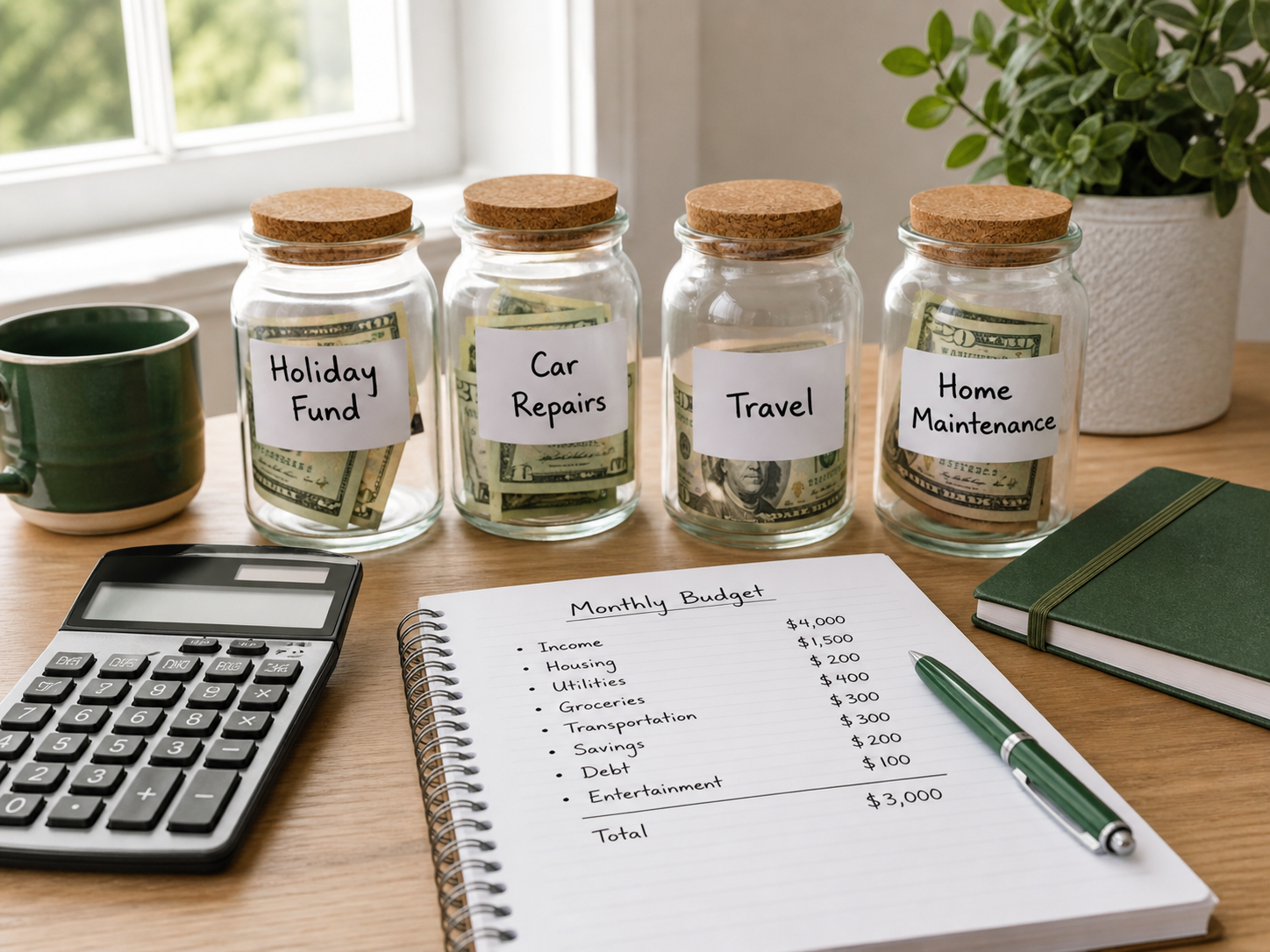
A sinking fund is money you set aside little by little for an expense you know is coming. It is one of the simplest ways to make a budget more realistic because it helps you prepare for costs that are expected, even if they do not happen every month. Instead of being surprised later, you plan ahead by saving in small amounts over time.
This is different from an emergency fund. Emergency savings are for the unexpected: things like urgent repairs, sudden medical costs, or short-term income problems. A sinking fund is for something you can reasonably anticipate. That might include holiday spending, car maintenance, annual insurance premiums, school supplies, home repairs, travel, gifts, or replacing household items.
The main reason sinking funds are so helpful is that they turn irregular expenses into regular saving habits. Many budgets feel fine until a non-monthly cost shows up. Then suddenly everything feels off. The problem is not always that the expense was surprising. Often, it was expected eventually, but there was no plan for how to handle it in advance.
For example, if you know holiday expenses come every year, you can save a little each month instead of trying to come up with the full amount in a short period of time. The same idea applies to annual fees, car repairs, birthdays, or back-to-school shopping. A sinking fund spreads the cost out over time, which often makes the expense much easier to manage.
Sinking funds also improve the honesty of your budget. A budget that ignores irregular costs can look healthier than it really is. If you only account for your monthly bills and weekly spending but ignore annual or seasonal expenses, you may keep feeling blindsided by costs that were actually predictable. Sinking funds make those predictable costs part of the plan.
To start a sinking fund, choose one upcoming expense that matters most. Estimate how much you will need and when you want the money ready. Then divide that amount over the months or pay periods available. This gives you a monthly target that can be added to your budget as a normal category instead of an afterthought.
You do not need a separate bank account for every sinking fund, although some people like that level of separation. Others simply track the categories in a notebook, spreadsheet, or budgeting app while keeping the cash in one savings account. The exact method matters less than the habit of assigning money to the purpose consistently.
It is often easiest to begin with one or two sinking funds rather than trying to create many at once. If you attempt too many categories immediately, the process can start to feel cluttered. Starting small keeps the system manageable. Once you get comfortable, you can always expand to other goals that matter.
Sinking funds are especially useful for reducing reliance on debt. When a predictable expense arrives and there is no money set aside, credit cards often become the backup plan. A sinking fund reduces that pressure by preparing the money in advance. Even if the fund does not cover the entire expense yet, having part of it saved can still make the situation much easier.
They are also helpful because they reduce the emotional shock of spending. It feels very different to pay for something with money you prepared on purpose than to feel like the expense came out of nowhere. A sinking fund creates mental and practical readiness at the same time.
If you are not sure where to begin, think about the expenses that seem to disrupt your budget again and again. Those are often the best candidates for sinking funds. The goal is not to create a complicated savings system. The goal is to smooth out the financial bumps that keep repeating.
A sinking fund is really just intentional preparation. By saving small amounts in advance for expenses you know will come, you make your budget steadier, more realistic, and easier to trust.