
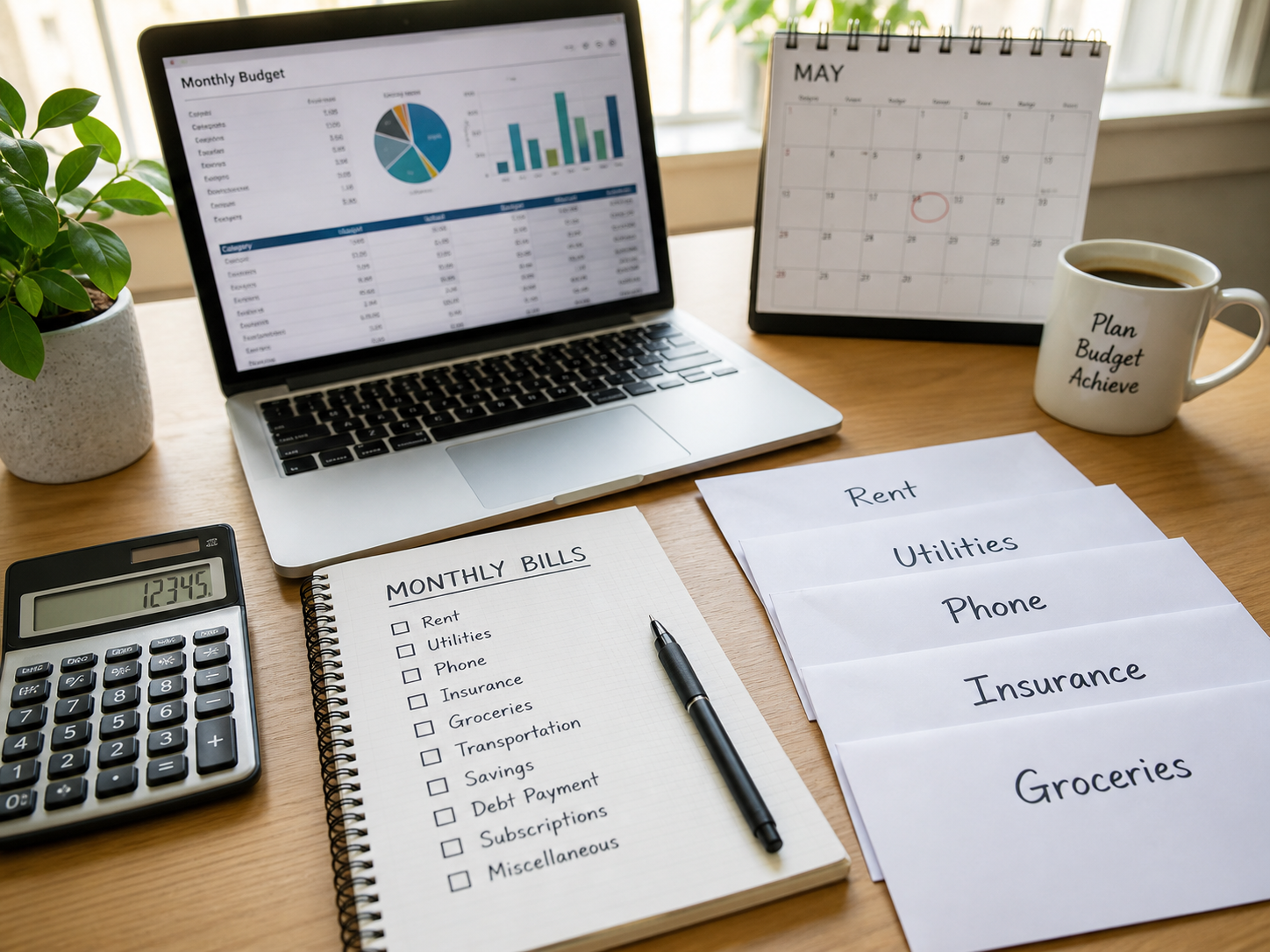
When budgeting feels messy, one of the most useful things you can do is go back to something simple: a bills checklist. A monthly bills checklist does not need to be fancy. Its job is to help you see what needs to be paid, when it is due, and which paycheck should cover it. That kind of visibility can reduce stress more than many people expect.
A lot of financial overwhelm comes from scattered information. One bill may be on autopay, another may be due by the tenth, another may fluctuate, and another may arrive by email and get forgotten. If those details live in different places, it becomes easy to feel like your money is slipping away without a clear plan. A checklist puts the essentials in one place.
Start with your fixed bills. These are the recurring expenses that usually happen every month, such as rent or mortgage, phone, internet, utilities, subscriptions, insurance, loan payments, and credit card minimums. Write down each bill and include the due date. If possible, also include the usual amount. Even if the amount changes slightly, an estimate is still helpful.
Once the fixed bills are listed, identify which paycheck will cover each one. This is especially useful if you are paid weekly, biweekly, or twice a month. Assigning bills to specific paychecks helps you stop viewing the month as one vague financial blur. Instead, each paycheck gets a job, and the checklist becomes a map rather than just a reminder.
After that, add variable essentials that may not have exact due dates but still need room in the budget. Groceries, gas, household supplies, and transportation costs may not show up like a bill in the mail, but they still matter. Including them in the checklist keeps the budget grounded in real life rather than focusing only on formal invoices.
A good checklist should be simple enough to use every month without resistance. Some people prefer paper. Others use a note on their phone, a spreadsheet, or a simple printable list. The format matters less than the habit. If the checklist feels too complicated, it may stop being useful. The best version is one you will actually check.
There is also value in reviewing the checklist before the month begins or before the next paycheck arrives. This gives you a chance to spot pressure points in advance. Maybe several larger bills land during the same pay period. Maybe there is an annual or quarterly expense approaching. When you can see that ahead of time, you have more room to prepare.
The checklist can also help you identify bills that no longer deserve a place in your budget. If you notice subscriptions you forgot about or recurring charges that no longer add value, that is useful information. Sometimes a clearer list reveals that the budget problem is not just about spending too much overall. It is about money leaving through channels you are no longer intentionally choosing.
Another benefit of a monthly checklist is peace of mind. Budgeting often feels stressful because the brain is trying to remember too much at once. Once the key bills are written down in one reliable place, you do not have to hold all that information in your head. That alone can make the financial side of the month feel more manageable.
If you are trying to improve your budget, do not underestimate the value of simple systems. A monthly bills checklist may not feel exciting, but it creates awareness, structure, and follow-through. Those are the things that make budgets work.
In the end, the purpose of the checklist is not perfection. It is clarity. When you know what is due, when it is due, and what paycheck should cover it, the budget becomes easier to follow and less stressful to maintain.