
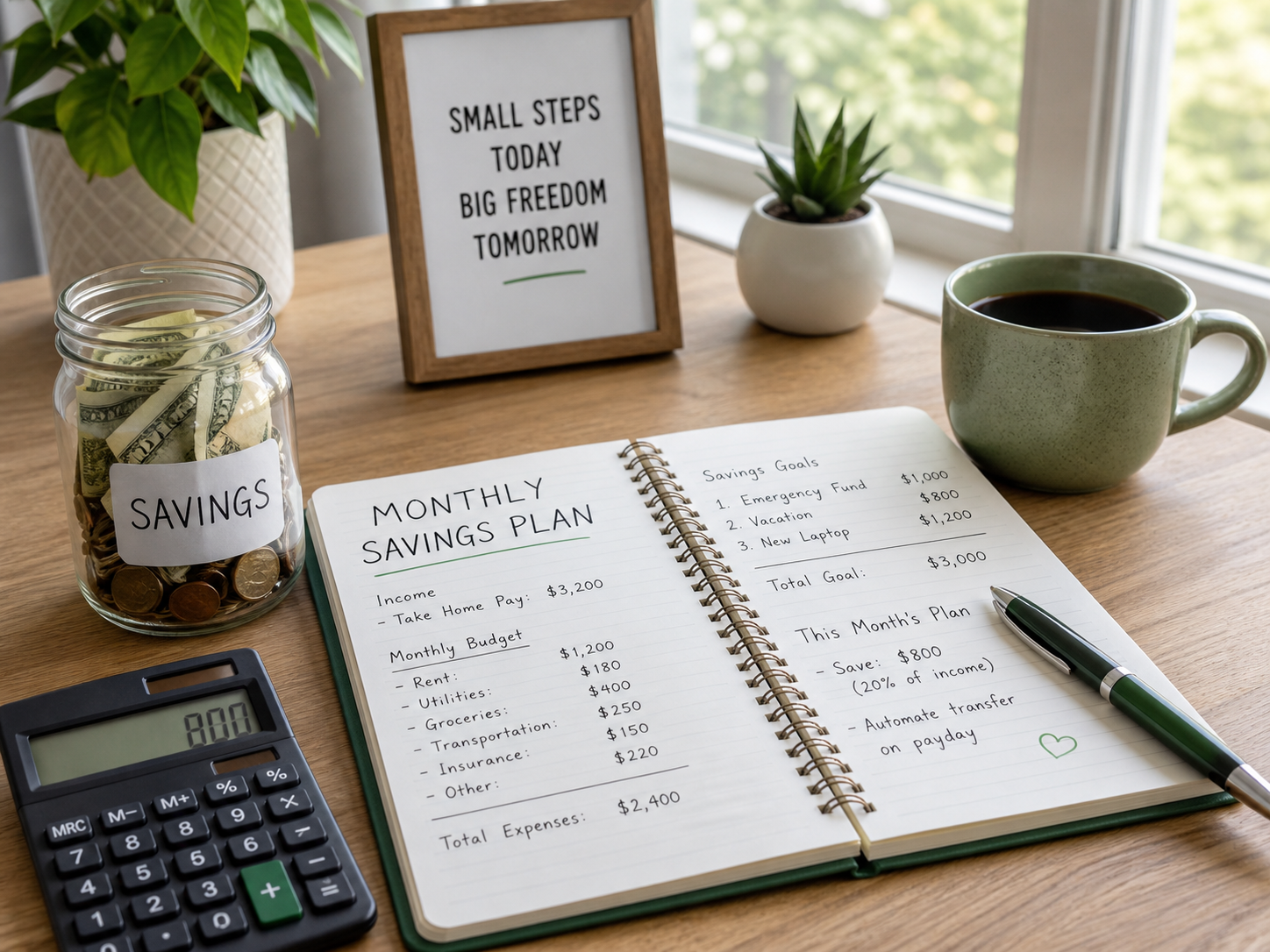
Saving money can feel almost impossible when the budget already feels stretched. When bills are pressing, groceries cost more than expected, and there never seems to be much left at the end of the pay period, saving can start to feel like something reserved for a future version of life that is less crowded. That is exactly why a starter savings habit matters. It begins where you are, not where you wish you were.
When money feels tight, the goal is not to save perfectly. The goal is to build the habit of setting something aside on purpose. That habit creates momentum, and momentum matters more than many people realize. A small savings habit can begin to change the way you think about your money, even before the balance becomes large.
One of the biggest mistakes people make is waiting for the “right time” to start. They tell themselves they will save once income rises, once debt is lower, once expenses calm down, or once the next season of life begins. The problem is that waiting for ideal conditions often keeps saving permanently delayed. A starter habit works because it does not require ideal conditions. It only requires a realistic beginning.
That beginning may be smaller than you would like, and that is okay. The amount does not need to look impressive to be meaningful. A modest contribution still proves that savings can become part of your financial rhythm. Once that rhythm exists, increasing the amount usually becomes easier later.
It helps to give the savings a purpose. A vague savings goal can feel easy to skip. A specific goal feels more real. Maybe the purpose is a starter emergency fund, a small cushion for unexpected costs, or the beginning of a sinking fund. When the money has a reason, small contributions tend to feel more worthwhile.
Another useful strategy is to treat savings like a category instead of a leftover. If you wait until everything else is finished, there may not be much left. Even when the amount is small, planning it early gives it a better chance of happening. This does not mean ignoring reality. If the amount needs to be adjusted, adjust it. The point is to make savings intentional rather than accidental.
Some people also benefit from keeping the savings separate from everyday checking money. It does not need to be complicated, but a little distance can reduce the temptation to spend it casually. When the money is clearly marked for a purpose, it becomes easier to protect.
Building a starter savings habit also means allowing yourself to think in stages. You do not need to leap from saving nothing to funding every future goal at once. Start with one target. Build consistency. Then expand. For many people, progress becomes more realistic when it is built in layers rather than all at once.
If saving has felt discouraging in the past, it may help to redefine success. Success is not always a dramatic number. Sometimes success is simply saving this month when last month nothing was saved. Sometimes it is proving that the habit can happen even in a tighter season. Those early wins matter because they create trust in the system you are building.
It is also important not to compare your savings pace to someone else’s. Different households have different obligations, incomes, and pressures. A savings habit that is realistic for your life is more valuable than copying a target that does not actually fit your budget. Consistency beats comparison.
When money feels tight, saving may never feel effortless at first. That does not mean it is not worth doing. Even a modest savings habit can reduce financial stress over time because it creates proof that not every dollar must immediately disappear into the next expense. That shift matters. It creates a little more breathing room, a little more confidence, and a stronger base for future goals.
The habit starts small, but it does not stay small forever if you keep feeding it. A starter savings habit is not about impressing anyone. It is about creating a pattern that supports you over time.